
The Diaphragm
Facts to Demystify Urban Legends

The human diaphragm is probably the most frequently discussed muscle among wind & brass players, as well as vocalists. It is also the most misunderstood.
In high school, my band director had us press on our belly to be sure the diaphragm was “firm.” This is an urban legend. The diaphragm isn't located in the belly; it isn’t even in your abdomen. Maybe you have heard other urban legends concerning the diaphragm.
The Truth About the Diaphragm
The diaphragm is a horizontally oriented muscle located within the rib cage. It is a muscle of respiration, pressure management, and postural stabilization. For this piece, I am focusing on its respiratory role.
The shape of the diaphragm is a double dome. The borders of the diaphragm connect to the inside of the rib cage and spine, separating the abdominal and thoracic cavities.
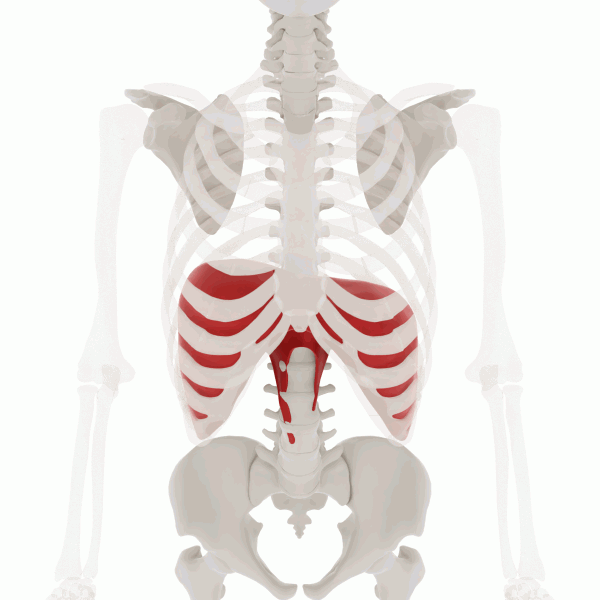
Locate the border of your diaphragm by palpating the lower border of your rib cage. Bonus - if you can wrap your fingertips up under the bottom of the rib cage, and inhale, the diaphragm will move your fingertips out.
Does double-domed matter?
Yes! The two sides of the diaphragm, left and right, are not the same. Notice the right dome is slightly higher than on the left in the illustration above. This has implications for breathing and being upright. For now, let’s stick to the big picture.
Inhalation & Exhalation
The diaphragm is a primary muscle of inhalation. It contributes to an increase in volume in the lungs by stretching them in a downward direction and the outward excursion of the lower ribs. This change creates a vacuum, or negative pressure, that draws air in.
On exhalation, the diaphragm returns to its domed position as air is expelled, and the volume of the rib cage decreases. We humans cannot manage the diaphragm directly; what we can manage is the movement of the rib cage. This video shows the expansion of the lungs thanks to the rib cage and diaphrgam.
But We Can’t Control It…
Despite its importance for breathing, we cannot control or directly feel the diaphragm. We can feel the excursion of the rib cage, the change of shape that takes place, and the increase of pressure in the abdomen. We know the diaphragm is doing its part when the rib cage moves well, and breathing is efficient. For more on the rib cage, check out, What is a Rib Cage Anyway? and What is a Rib Cage Anyway? pt. 2
The Bottom Line
Breath management in music-making: air speed, pressure, or getting out of breath holding, is initiated from rib cage movement. Efficient breathing that supports musical intention is a sure sign that the diaphragm is doing its job.
I hope this piece dispels the urban legends of the diaphragm for you. If you have a question, leave a comment!
Happy music-making & don’t forget to be curious…